
The Unopened Book
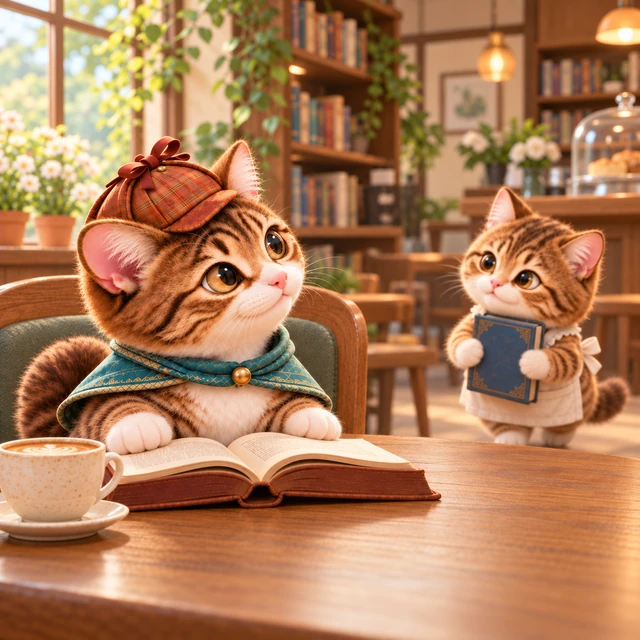
A woman was in a café when she picked up an old book by her feet and began to read it.
Noticing this, the owner brought over another book.
The woman kept reading the first one and never opened the second.
When she left, she returned the book she had been reading to the owner.
The owner put it on a shelf, but the second book remained closed beside the seat where she had been sitting.
Why had the owner brought over another book?
Question your assumptions, one by one.
Ask the AI your own questions and uncover the truth behind the mystery.
View Hints
Hints
Use as many hints as you need, one at a time.
Hint 1
Something changed near her seat when she picked up the first book.
Hint 2
The owner did not intend the woman to read the second book.
Hint 3
It was the table that changed: it began to wobble slightly.
Hint 4
What mattered about the second book was its thickness, not its contents.
Hint 5
The first book had originally been supporting a table leg.
Hint 6
The owner wedged the second book, still closed, under the leg in place of the book she had removed.
Hint 7
Removing the first book made the table wobble, so the owner used another book to support it again. There was no need to open the second book.
Check the Answer
Answer
The first book had been wedged under a table leg to keep the table from wobbling.
When the woman removed it, the owner brought another book and wedged it under the leg in its place.
Explanation
The old, thin book was sticking out from under the table leg. The woman thought someone had dropped it, picked it up, and became interested enough to start reading. Removing it, however, left the table wobbling.
The owner noticed and, rather than take away the book she was reading, wedged another book of about the same thickness under the leg.
To the woman, a book was something to read. What the owner needed from the second book was its thickness as a support, not its contents. There was no reason to open it.
When the woman returned the first book before leaving, the owner put it on a shelf. The second book stayed in place, continuing to support the table.
For example: “Did the owner want her to read the second book too?” — “No.” “Was the second book useful because of its thickness?” — “Yes.” Setting aside a book’s usual purpose explains both why this one stayed closed and why it remained beside her seat.
If the solution makes sense to you, add your vote. One vote per browser.